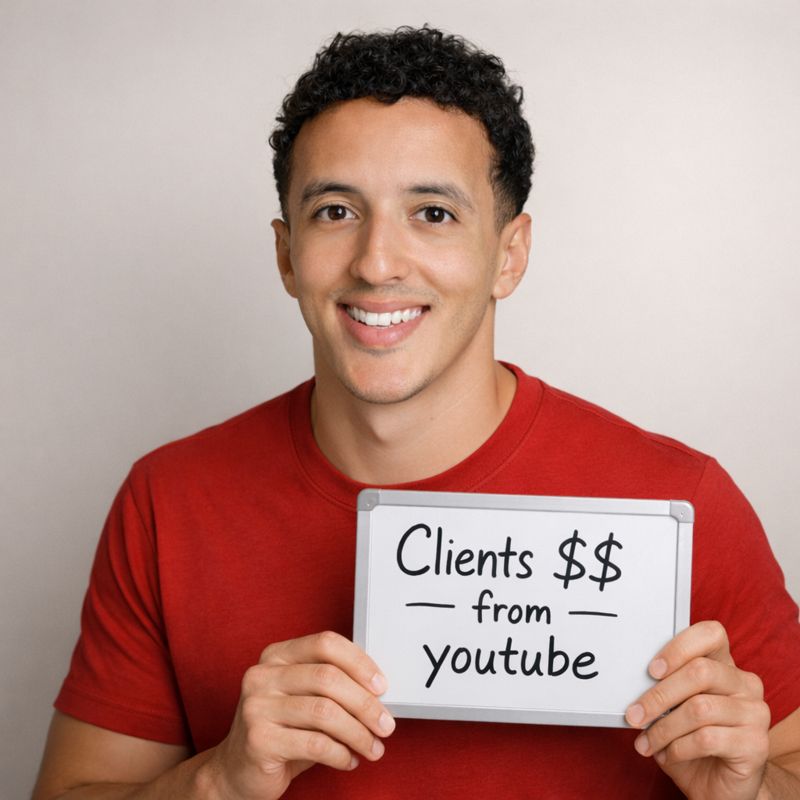
Most people get YouTube wrong. They think the goal is to “blow up” — big views, big subscribers, a channel that looks impressive. But high-ticket clients don’t come from impressing strangers.
They come from reaching the right people at the exact moment they’re searching for a solution — then guiding them into your world long enough that by the time they book a call, they already trust you.
That’s why YouTube is the most underrated lead-gen platform on the internet. It’s not a social platform first. It’s an information platform — people show up with a problem, type it in, and want answers. And if you give them the answer clearly and confidently, you become the obvious next step.
1) Understand why YouTube prints high-ticket leads
High-ticket buyers don’t buy because you posted something “cool.” They buy because they believe: you understand their situation, you have a clear process, and you can get them a result.
YouTube helps with all three because of one advantage: time. People spend minutes with you, not seconds. The more time they spend, the more trust you build — without ever getting on a call first.
The game is simple: use content to pre-sell. Use the call to qualify + close.
2) Know the 3 ways YouTube can feed your pipeline (and use all of them)
You need leads in your pipeline — because more leads = more conversions (if your offer is solid). YouTube can support all three:
A) Create leads (Organic): searchable content that compounds.
B) Borrow traffic: collaborations, interviews, being featured.
C) Paid: later, ads to your best content as a warm-up machine.
If you only do one: start with organic. Long-term: build a channel that can handle all three.
3) Create content that’s designed to book calls (not “perform”)
The goal is creating the right content for target clients to find — then using automation + CTA to get booked calls. A simple 3-bucket system:
Bucket #1: Action-based + educational (search intent).
Bucket #2: Long-form “course style” videos (30+ min) to build deep trust.
Bucket #3: Case studies to provide proof.
4) How to find video ideas that attract buyers (not random viewers)
High-ticket content starts with: “What is my buyer already thinking about at 2am?” Two methods:
Method 1: Study competitors (don’t copy) + read comments.
Method 2: Break your offer into 10 steps → turns into months of content.
5) Your video structure matters more than your editing
Better gear helps, but the lever is whether the viewer stays long enough to trust you. A simple structure:
Hook (30s): confirm topic + proof + transition.
Value (set 1): lists + stories + examples.
CTA: short, direct, don’t wait until the end.
Value (set 2): more examples, keep it human.
Next video: build the binge.
6) Editing: enough to keep attention, not enough to distract
Editing supports the message — it doesn’t replace it. For B2C, add engagement edits. For B2B, keep it clean and professional.
7) Packaging: thumbnails + titles decide if you get the click
People decide what to watch based on thumbnail + title in seconds. Keep thumbnails short (3–5 words), trigger curiosity/fear/desire, and make the title keyword-aligned and emotionally relevant.
8) SEO: help the right people find you
Use your buyer’s language in descriptions and metadata. Include a keyword-rich paragraph, links, timestamps, and other relevant videos.
9) The actual “high-ticket pathway” (what happens when it works)
Typical pathway: they find your content → watch 2–3 videos → subscribe → take CTA → consume hours of your content → buy.
Even if they discover you elsewhere (IG/LinkedIn), YouTube becomes your proof library and credibility stack.
10) Clone your high-ticket funnel and plug YouTube into it
You don’t need a new funnel. You need a funnel YouTube can feed: Video → CTA → booking page/lead magnet → nurture → call.
11) Why most people never get high-ticket clients from YouTube
Most people quit before compounding kicks in. YouTube looks quiet until one video ranks — then your pipeline changes.
12) A simple execution plan you can follow for the next 30 days
Week 1: define buyer + break offer into 10 steps + write 20 topics.
Week 2: publish 2 search-based videos using the structure.
Week 3: publish one long-form course-style video (30–45 min), CTA twice.
Week 4: publish proof (case study/interview) and reference it later.
Final thought
YouTube isn’t a “content strategy.” It’s a client acquisition system. Create the right content for the right person, package it well, structure it so they actually watch, then lead them into a simple CTA that puts them into your funnel. If you’re consistent, it stops being a hustle and becomes an asset.